
- October 20, 2025
- Posted by: Gold Iinn
- Category: News & Updates
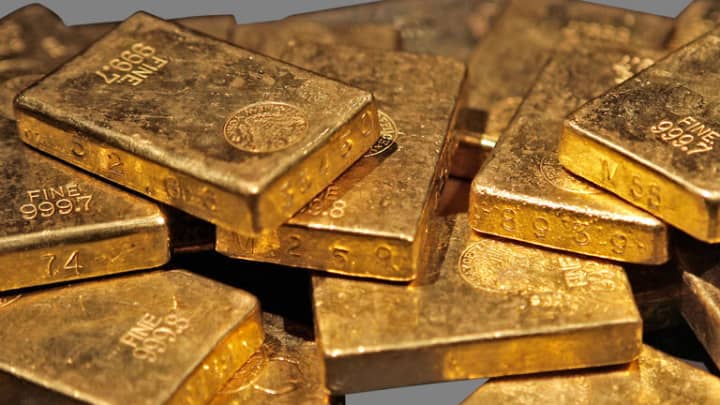
Gold prices edged higher on Monday, helped by chances of further U.S. interest rate cuts, while investors awaited U.S. inflation data and U.S.-China trade negotiations this week for further direction.
In Dubai, gold rates marked slight increases on Monday, with 24-carat gold gaining AED1.75 to AED514.00 and 22-carat gold rising AED1.75 to AED476.00. Additionally, 21-carat gold rose AED1.50 to AED456.50, while 18-carat gold gained AED1.25 to AED391.25.
Spot gold was up 0.04 percent at $4,252.77 per ounce. U.S. gold futures for December delivery climbed 1.25 percent to $4,263.36 per ounce.
Spot silver rose 0.48 percent to $52.15 per ounce. Prices fell about 4.4 percent on Friday in their worst session since early April, after hitting a record high of $54.47 earlier in the day.
Financial market dynamics played a critical role. Investors increasingly anticipate the U.S. Federal Reserve will cut interest rates soon due to concerns surrounding regional U.S. banks, a slowing labor market, and broader economic uncertainty. These expectations reduce the opportunity cost of holding non-yielding gold, boosting its appeal. Market experts suggest a roughly 98 percent probability of a 25-basis-point rate cut in October, followed by another cut by December.
Heightened safe-haven demand
Compounding these pressures, ongoing trade tensions between the U.S. and China heightened safe-haven demand. Earlier threats by President Donald Trump to impose massive 100 percent tariffs on all Chinese imports starting November 1 caught markets off guard, followed by China tightening export controls on critical rare earth materials. While Trump later downplayed the likelihood of the tariffs and expressed willingness to continue talks, the escalation has unsettled investors worried about global growth and supply chain disruptions. Both sides have maintained dialogue plans with presidents Trump and Xi Jinping scheduled to meet later in the month, though concerns about potential retaliatory measures persist.
The week’s gold price resilience also reflects broader investor behavior, including heavy buying from central banks, exchange-traded funds (ETFs), retailers, and individual consumers seeking to hedge against currency depreciation and financial volatility. The rally’s strength was such that even a firm U.S. dollar did not halt gold’s rise, illustrating the metal’s unique position as a safe-haven asset that often moves counter to dollar strength.
Regional U.S. banks faced recent turmoil when two banks reportedly failed to repay loans, triggering stock sell-offs. This banking sector fragility has reinforced gold’s allure as a sanctuary for capital, with market analysts noting that the sector’s troubles are shifting investor sentiment toward precious metals as a safer bet.
Gold’s upward trajectory has started to attract analyst forecasts for even higher prices. Some experts highlight possible targets of $4,500 an ounce in the near term, while forecasts for 2026 now aim for levels approaching $5,000. Supporting these projections are expectations of prolonged economic uncertainty, sustained low interest rates, inflationary pressures, and continuing geopolitical risks.